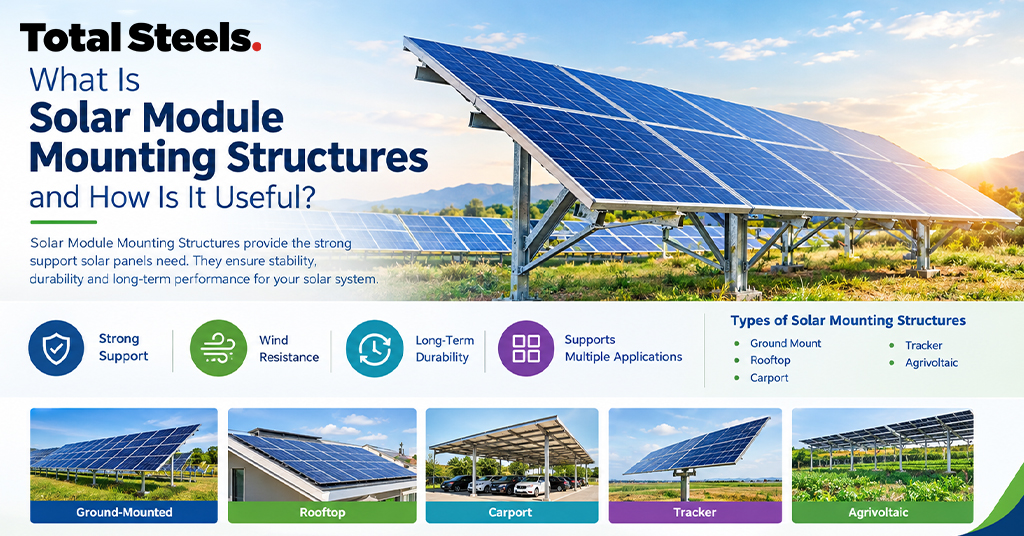
Selecting solar panels is often straightforward. Choosing the right mounting structure is where project success is truly determined.
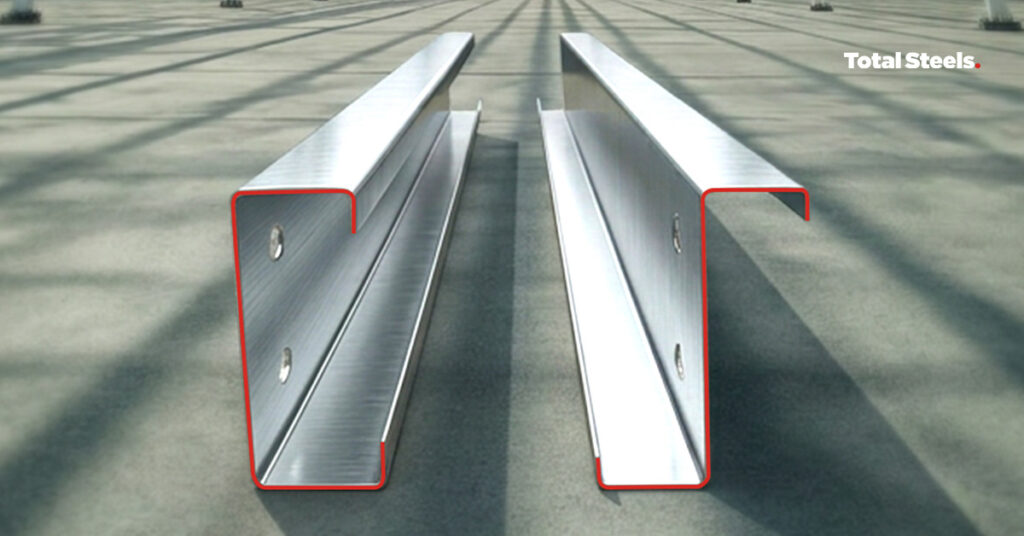
The mounting structure supports the entire solar installation for decades. A poor structural choice can lead to increased maintenance, installation delays, corrosion issues, and reduced project life.
Whether you’re developing a utility-scale solar farm, rooftop installation, or commercial carport, understanding the available structure options is essential.
Fixed Tilt Ground Mount Structures
Fixed tilt systems are the most widely used mounting structures in utility-scale projects.
Best For:
- Solar farms
- Open land installations
- Large-scale power generation
Advantages:
- Cost-effective
- Simple installation
- Minimal maintenance
- Proven long-term reliability
For most utility projects, fixed tilt structures offer the best balance between performance and investment.
RCC Rooftop Structures
Designed specifically for reinforced concrete roofs, RCC rooftop structures provide stable support without major modifications to existing buildings.
Common Applications:
- Factories
- Commercial complexes
- Educational institutions
- Warehouses
The design must account for roof load capacity, wind conditions, and drainage requirements.
Solar Carports
Carports combine vehicle parking with solar power generation.
Benefits:
- Efficient land utilization
- Vehicle protection
- Additional energy generation
- Attractive architectural appearance
Carports are increasingly popular in industrial facilities, malls, airports, and corporate campuses.
Elevated Structures
Elevated systems create usable space beneath the solar installation.
These are often used for:
- Parking areas
- Agricultural land
- Industrial yards
- Storage zones
Proper structural design becomes critical due to increased wind loads and larger spans.
Single-Axis Trackers
Trackers follow the sun’s movement throughout the day.
Advantages:
- Higher energy generation
- Improved project efficiency
Considerations:
- Higher initial cost
- Increased maintenance
- More complex installation
Trackers are generally suitable for large utility-scale projects where maximum output is the primary objective.
Factors to Consider Before Selection
When choosing a structure, evaluate:
- Site location
- Wind speed requirements
- Soil conditions
- Available space
- Corrosion environment
- Budget
- Maintenance expectations
Final Thoughts
The best solar mounting structure depends on project requirements rather than a one-size-fits-all solution.
A properly engineered structure delivers durability, faster installation, lower maintenance, and reliable performance throughout the life of the solar plant.
At Total Steels, we manufacture solar mounting systems engineered for Indian conditions, utility-scale performance, and long-term reliability.